OUR CLIMATE ACTIONS
OUR CLIMATE ACTIONS
Suunto Forest × Tree-Nation
Tree-Nation is a non-profit organization dedicated to reforestation and helping companies offset their carbon emissions by planting trees around the world. Through our collaboration with Tree-Nation, Suunto supports the Eden Reforestation Project in Mozambique, which focuses on restoring native forests, improving biodiversity, and creating sustainable livelihoods. The project contributes to ecosystem recovery, CO2 capture, and long-term social and environmental resilience for local communities. Tree-nation’s platform ensures transparency by tracking every tree planted and verifying the carbon offset through recognized international standards and verified carbon units.

Why Tree Planting Matters
Climate change is driven by greenhouse gas emissions — and carbon dioxide (CO₂) is the main contributor, alongside other gases such as methane (CH₄), nitrous oxide (N₂O), and fluorinated gases. Forests act as natural carbon reservoirs, helping to reduce the amount of CO₂ and other greenhouse gases in the atmosphere. However, when forests are cleared, burned, or degraded, they release stored carbon back into the air instead of capturing it.
Trees are essential to life on Earth. They absorb carbon, regulate water cycles, provide habitats for countless species, and support the livelihoods of millions of people. When forests are destroyed, the consequences are far-reaching — from biodiversity loss and soil erosion to increased flooding, food insecurity, and displacement of communities.
By planting trees, we can help reverse these trends. Each tree captures carbon from the atmosphere while helping to restore balance to our planet’s ecosystems.
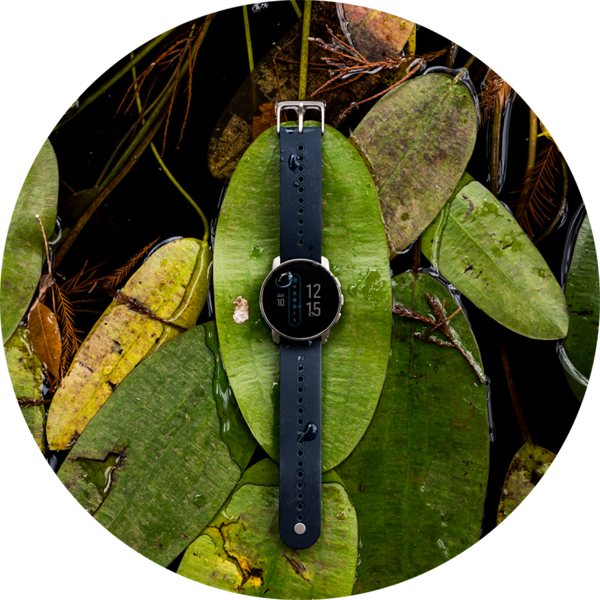
Carbon footprint of Suunto outdoor watches
The emission calculation includes the whole product package: the watch, strap, charging cable, sales box, and manuals. The “cradle‑to‑grave” approach means we calculate emissions for the product’s full life cycle - from raw materials all the way to disposal of the product.
Suunto outdoor watches are made in China. The average carbon footprint is calculated based on the actual production numbers of each watch model. For the purpose of the calculation, the estimated product life cycle is set at two years, even though the actual lifespan of Suunto watches is typically much longer.
The average carbon footprint of Suunto outdoor watch is 9.68 kg* CO₂e.
*Includes models Suunto 9 Peak Pro, Vertical, Race, Race S, Run, Race 2 and Vertical 2
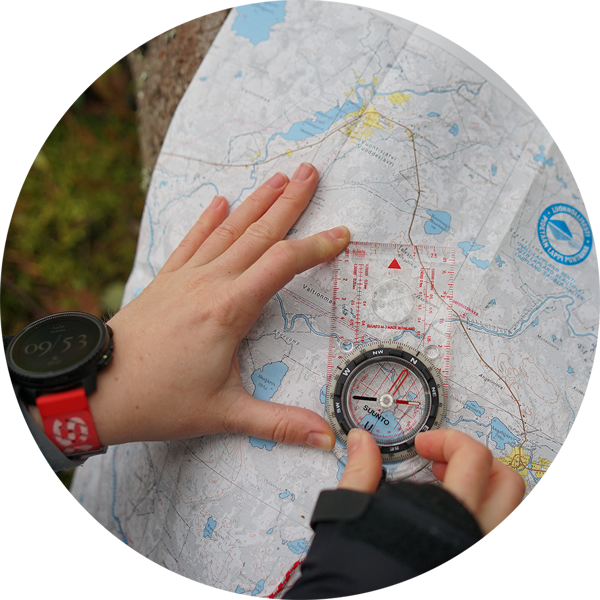
Carbon footprint of Suunto field compasses
The emission calculation includes the whole product package: the compass, lanyard, sales box, and manuals. The “cradle‑to‑grave” approach means we calculate emissions for the product’s full life cycle - from raw materials all the way to disposal of the product.
All Suunto field compasses are manufactured in Finland using renewable energy. The estimated life cycle for the models is 20 years, except for the AIM-6 and AIM-30, which have an estimated life cycle of 5 years.
Carbon footprint of Suunto bone conduction headphones
The emission calculation includes the whole product package: the headphone, power bank (if applicable), charging cable/station, sales box, and manuals. The “cradle‑to‑grave” approach means we calculate emissions for the product’s full life cycle - from raw materials all the way to disposal of the product.
Suunto headphones are made in China. The average carbon footprint is calculated based on the actual production numbers of each headphone model. For the purpose of the calculation, the estimated product life cycle is set one year, even though the actual lifespan of the product might be longer.
The average carbon footprint of Suunto bone conduction headphone with powerbank (models Wing/Wing 2 and Aqua) is 9.61 kgCO₂e. The average carbon footprint of Suunto bone conduction headphone without powerbank (models Sonic and Aqua) is 5.07 kgCO₂e.
Carbon footprint of Suunto Nautic dive computer
The emission calculation includes the whole product package: the dive computer, charging cable, sales box, and manuals. The “cradle‑to‑grave” approach means we calculate emissions for the product’s full life cycle - from raw materials all the way to disposal of the product.
Suunto Nautic dive computers are made in Finland. For the purpose of the calculation, the estimated product life cycle is set as 5 years, even though the actual lifespan of the product is typically much longer.
The carbon footprint of Suunto Nautic dive computer with bungee cord or textile strap is 14.63 kgCO₂e.
Our Climate Commitment
Tracking our company emissions
We’ve been tracking greenhouse gas (GHG) emissions since 2009, following the GHG Protocol Corporate Standard. Our reporting covers emissions from our own operations (Scopes 1 and 2) and, since 2023, includes relevant categories from our value chain (Scope 3). This now spans our facilities in Finland, and offices in the UK and France. Most of our emissions come from purchased goods and services. Understanding this helps us focus on where reductions matter most.
Standards and external verification
All Suunto’s emission calculations are conducted and verified by external partners in accordance with the GHG Protocol and relevant ISO standards:
- Corporate emissions are calculated following the GHG Protocol Corporate Accounting and Reporting Standard.
- Product carbon footprints (Life Cycle Assessments) are calculated according to the GHG Protocol Product Life Cycle Accounting and Reporting Standard and are third-party verified in line with ISO 14025 and ISO 14040/14044.
Committed to Science Based Targets
In 2025, we committed to the international Science Based Targets initiative (SBTi) and the 1.5 °C climate goal under the Paris Agreement. Following this commitment, we are developing a carbon emissions reduction roadmap and setting near-term science-based targets to align with the SBTi framework.